


News
News
2017 Energy Work Guidelines: Continue Implementing the Leading Runner Program for Photovoltaics
Release time:
2017-02-20
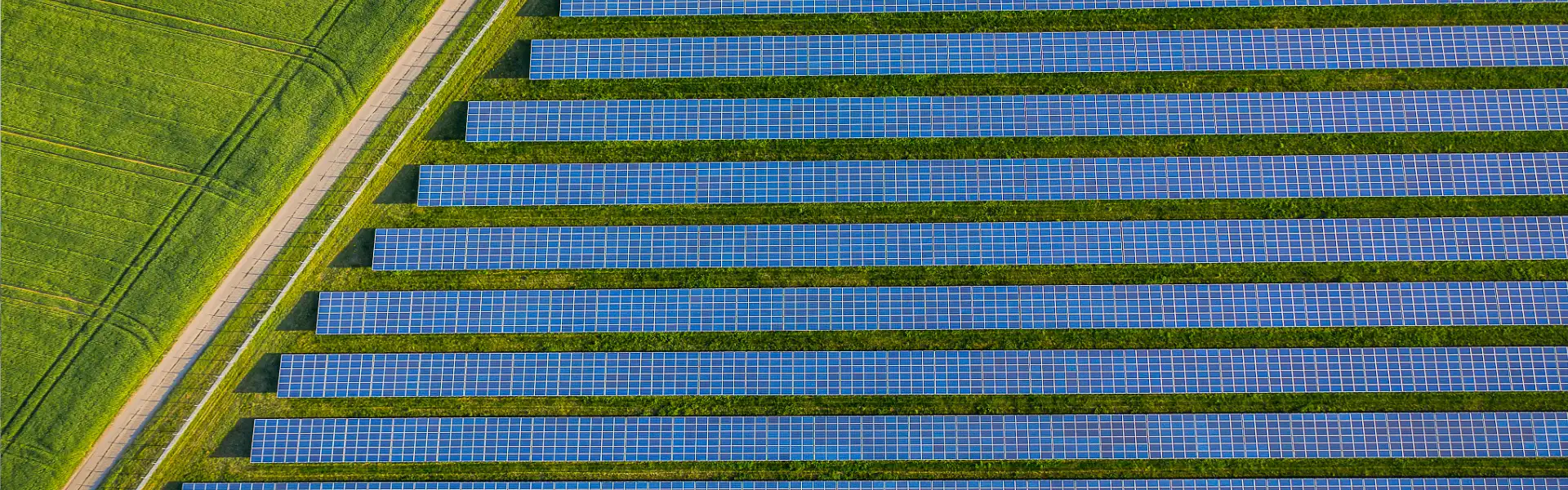
The National Energy Administration issued the "Notice on Issuing the 2017 Guiding Opinions on Energy Work" (hereinafter referred to as the "Notice"). The Notice requires vigorous development of solar energy. It continues to implement the "Leading Runner" program for photovoltaic power generation, giving full play to market mechanisms to drive down generation costs. The Notice adjusts the development layout of photovoltaic power plants, strictly controlling the newly added capacity in areas with serious curtailment, and suspending the arrangement of new photovoltaic power generation capacity in provinces with a curtailment rate exceeding 5%. It steadily promotes the first batch of demonstration projects for solar thermal power generation.
The National Energy Administration issued the "Notice on Issuing the 2017 Energy Work Guidelines" (hereinafter referred to as the "Notice"). The Notice requires vigorous development of solar energy. It continues the implementation of the "Leader" program for photovoltaic power generation, giving full play to market mechanisms to drive down generation costs. The development layout of photovoltaic power stations will be adjusted, with strict control over the newly added capacity in areas with serious curtailment of photovoltaic power generation. Provinces with a curtailment rate exceeding 5% will have new photovoltaic power generation capacity arrangements suspended. The first batch of demonstration projects for solar thermal power generation will be steadily advanced.
The plan for this year is to arrange for the commencement of construction of 20 million kilowatts and an increase in installed capacity of 18 million kilowatts. The preliminary work on projects in some areas will be carried out in an orderly manner, with a project scale of 20 million kilowatts.
Attachment
2017 Energy Work Guidelines
2017 is a crucial year for the full implementation of the "Thirteenth Five-Year Plan" and the deepening of supply-side structural reforms. We must thoroughly implement the spirit of the 18th National Congress of the Communist Party of China and the Third, Fourth, Fifth, and Sixth Plenary Sessions of the 18th Central Committee, firmly establish and implement the new development philosophy of "innovation, coordination, green, openness, and sharing," follow the strategic thinking of "four revolutions, one cooperation" for energy development, implement the strategic deployment of the Central Economic Work Conference, take the advancement of energy supply-side structural reform as the main line, focus on improving the quality and efficiency of supply, focus on resolving and preventing overcapacity, focus on promoting the clean development and utilization of energy, focus on making up for shortcomings in energy development, provide strong energy security for economic and social development, and greet the successful convening of the 19th National Congress of the Communist Party of China with outstanding achievements.
I. Main Development Goals
(1) Energy Consumption
The total national energy consumption will be controlled at around 4.4 billion tons of standard coal. The proportion of non-fossil energy consumption will increase to around 14.3%, the proportion of natural gas consumption will increase to around 6.8%, and the proportion of coal consumption will decrease to around 60%.
(2) Energy Supply
The total national energy production will be around 3.67 billion tons of standard coal. Coal production will be around 3.65 billion tons, crude oil production around 200 million tons, and natural gas production around 170 billion cubic meters (including shale gas production of around 10 billion cubic meters).
(3) Energy Efficiency
Energy consumption per unit of GDP will decrease by more than 5.0% year-on-year. The average coal consumption of coal-fired power plants will be 314 grams of standard coal/kWh, a decrease of 1 gram year-on-year. The scale of energy-saving transformation of coal-fired power plants will reach 60 million kilowatts.
II. Key Tasks
(1) Resolving and Preventing Overcapacity
We will unswervingly implement the annual work deployment for reducing overcapacity, accelerate the elimination of backward production capacity, steadily develop advanced production capacity, improve production capacity utilization efficiency, and promote the matching of production capacity with actual output.
We will continue to resolve overcapacity in coal production. We will use market-oriented and rule-of-law methods to resolve overcapacity, scientifically and reasonably determine the annual target for reducing overcapacity, and strictly implement the procedures for public announcements, shutdown, cancellation of licenses, and inspection and acceptance. We will further improve safety, environmental protection, and technical standards, eliminate a batch of coal mines with serious disasters, depleted resources, backward technology and equipment, lack of safe production conditions, and non-compliance with coal industry policies. We will strive to close more than 500 backward coal mines this year and withdraw about 50 million tons of production capacity. In accordance with the principle of reduction and replacement, we will orderly develop advanced production capacity. We will regulate the order of coal mine production and construction, and increase the efforts to govern illegal behaviors such as construction before approval and overcapacity production. We will improve the coal mine production capacity registration and announcement system, extending the announcement scope from production coal mines to construction coal mines, and realizing full-coverage production capacity announcements.
We will effectively prevent and resolve the risk of overcapacity in coal-fired power generation. In accordance with the principles of cleaning up violations, strictly controlling incremental capacity, and eliminating backward capacity, we will formulate and implement "steady, accurate, and hard-hitting" measures. By 2020, the total installed capacity of coal-fired power generation will be controlled within 1.1 billion kilowatts. We will resolutely clean up illegal projects, and all illegal construction projects such as construction before approval and illegal approval will be stopped. We will continue to implement the risk warning mechanism for coal-fired power generation planning and construction, and strictly implement control measures such as suspension of approval and suspension of construction. According to the electricity market demand in the receiving areas, we will orderly promote the construction of cross-regional power transmission channels and build coal-fired power base transmission projects in a synchronized manner as needed. We will actively promote the release of power generation and use plans and reasonably guide investment and construction expectations. We will continue to increase efforts to eliminate backward coal-fired power generating units, focusing on eliminating and upgrading units that still do not meet energy efficiency and environmental protection requirements after transformation. It is expected that the elimination scale in 2017 will exceed 4 million kilowatts.
We will promote the upgrading of oil product quality. From January 1, 2017, the whole country will fully supply National V standard gasoline (including E10 ethanol gasoline) and diesel (including B5 biodiesel) for vehicles. From July 1, 2017, the whole country will fully supply ordinary diesel with a sulfur content of no more than 50 ppm. We will make preparations for the nationwide supply of ordinary diesel with a sulfur content of no more than 10 ppm from January 1, 2018. We will conduct special supervision and inspection of the upgrading of refined oil quality to ensure the market supply of clean oil products. Based on the National VI standards for vehicle gasoline and diesel, we will accelerate the release of the new version of vehicle ethanol gasoline and biodiesel standards and carry out relevant upgrading and transformation. We will moderately expand the production scale and consumption area of biofuel ethanol.
(2) Promoting the Large-Scale Development of Non-Fossil Energy
Focusing on achieving the goals of the "Thirteenth Five-Year Plan," we will focus on solving prominent problems such as wind power, photovoltaic power, and hydropower curtailment, promote the coordination of power generation construction with consumption and transmission, and improve the quality and efficiency of clean and low-carbon energy development.
We will actively develop hydropower. We will accelerate the construction of large hydropower bases such as the Jinsha River, Yalong River, and Dadu River. We will strengthen the construction of power transmission channels for the transmission of hydropower from Southwest China to South China, Central China, and East China, and comprehensively promote projects such as the Jinzhong, Dianxibei, and Sichuan power transmission third channel. We will establish a hydropower utilization monitoring system to timely analyze and warn of hydropower utilization and curtailment. We will establish and improve a mechanism for sharing the benefits of hydropower development and formulate and implement "Regulations on Planning and Design of Land Acquisition and Relocation for Hydropower Projects in Minority Areas."
We will steadily develop wind power. We will optimize the layout of wind power construction and development, and the focus of new capacity will mainly shift to the central and eastern and southern regions. We will strictly control new grid-connected projects in areas with serious wind power curtailment and restrictions, release the 2017 wind power industry warning information, and suspend the arrangement of new wind power capacity in provinces with a curtailment rate exceeding 20%. We will orderly promote the planning and construction of wind power bases such as those around Beijing-Tianjin-Hebei, the Jinsha River valley, and the Yalong River valley, which complement wind, solar, and hydropower. We will accelerate the development and utilization of offshore wind power.
We will develop nuclear power safely. We will actively promote the construction of qualified nuclear power projects and organize approval and commencement in accordance with procedures. We will orderly start the approval and construction preparation of subsequent coastal nuclear power projects and promote the protection and demonstration of nuclear power plant sites. We will continue to implement major national science and technology projects for nuclear power and promote the construction of high-temperature gas-cooled reactor demonstration projects. We will steadily promote the preliminary work of small reactor demonstration projects and actively explore the comprehensive utilization of nuclear energy.
We will vigorously develop solar energy. We will continue to implement the "Leader" program for photovoltaic power generation, giving full play to market mechanisms to drive down generation costs. The development layout of photovoltaic power stations will be adjusted, with strict control over the newly added capacity in areas with serious curtailment of photovoltaic power generation. Provinces with a curtailment rate exceeding 5% will have new photovoltaic power generation capacity arrangements suspended. The first batch of demonstration projects for solar thermal power generation will be steadily advanced.
Actively develop and utilize biomass energy and geothermal energy. Promote the industrialization demonstration of biogas, focusing on the construction of demonstration projects in Heilongjiang Reclamation Area, Xinjiang Uygur Autonomous Region, and Xinjiang Production and Construction Corps, and actively develop the "three-in-one" county-level circular economy of energy, agriculture, and environmental protection biogas. Accelerate the construction of relevant standards systems, and promote the commercialization and industrialization of biogas and organic fertilizers. Formulate and issue industrial policies on the comprehensive shift of agricultural and forestry biomass power generation to combined heat and power generation to improve the utilization efficiency of biomass resources. Establish a monitoring system for the layout planning of biomass power generation projects, and incorporate new projects into provincial planning management. Promote geothermal heating and cooling, and leverage the role of geothermal energy in replacing scattered coal burning and promoting air pollution control.
(III) Promoting Clean Development and Utilization of Fossil Energy
Promote advanced and applicable technologies, accelerate the transformation and upgrading of the traditional energy industry, focus on innovating energy production and consumption models, consolidate the foundation for the development of fossil energy, and enhance energy security capabilities.
Promote green and efficient development and utilization of coal. Promote green mining technologies such as backfilling mining, water-conserving mining, and coal and gas co-mining, and promote the comprehensive management of coal mining subsidence areas. Promote advanced technologies and equipment to improve the "three modernizations" level of coal mine mechanization, informatization, and intelligence. Implement comprehensive dust control to reduce coal dust emissions. Vigorously develop coal washing and processing to improve the quality of commercial coal, with the raw coal selection rate increased to 70%. Implement ultra-low emission and energy-saving transformation of coal-fired power plants, and complete ultra-low emission and energy-saving transformation of all qualified units in the eastern region by the end of 2017.
Improve oil and gas security capabilities. Fully implement the "13th Five-Year Plan" for major oil and gas science and technology projects, focusing on supporting major theoretical and technological innovations in onshore deep layers, deep-water oceans, and unconventional oil and gas exploration and development. Strengthen coordination in the use of the sea and further promote the exploration and development of offshore oil and gas. Promote the construction of new production capacity in national-level shale gas demonstration areas, striving to achieve a new production capacity of 3.5 billion cubic meters. Accelerate the construction of interconnected natural gas trunk pipelines to improve natural gas supply security capabilities. Promote major projects for the exploration, development, and utilization of coalbed methane, and accelerate the construction of coalbed methane industrial bases in the Qinshui Basin, the eastern edge of the Ordos Basin, and Bishuixing in Guizhou. Accelerate the construction of coalbed methane (coal mine gas) transportation and utilization facilities, develop coalbed methane compression and liquefaction in a way that suits local conditions, and promote low-concentration gas power generation. Promote the construction of national petroleum reserve bases, and orderly carry out the collection and storage of state reserves of crude oil to improve the national petroleum reserve capacity.
Expand natural gas utilization. Formulate and implement the "Opinions on Accelerating the Promotion of Natural Gas Utilization" to promote large-scale utilization in key areas such as urban gas, gas-fired power generation, industrial fuel, and transportation fuel. Promote the integrated development of natural gas and renewable energy, and implement natural gas integrated development demonstration projects in Sichuan, Jiangsu, and Guangdong. Promote gasification projects in key areas for air pollution control in the Beijing-Tianjin-Hebei region. Promote the replacement of ship fuel with natural gas in the Yangtze River Delta region, and promote pilot projects for vehicle and ship natural gas and river-sea intermodal transport. Actively promote direct supply of natural gas to large users. Vigorously promote the development of distributed natural gas energy.
(IV) Strengthening Energy System Shortcomings
Addressing bottlenecks such as insufficient peak regulation capacity, low operating efficiency, and weak infrastructure, we will focus on optimizing the energy system, improving relevant policies and measures, enhancing system coordination and flexibility, and improving energy system efficiency.
Strengthen peak regulation capacity construction. Complete pilot projects for flexible transformation of coal-fired power units and further expand the scope of transformation. Study and implement incentive mechanisms for coal-fired power units to participate in peak regulation, and establish and improve compensation mechanisms for auxiliary services (markets). Solidly advance the construction of planned pumped storage power stations, and study adjustments to the peak and valley electricity price mechanism for pumped storage. Adjust the site selection planning of pumped storage power stations in some provinces and regions to optimize development layout. Accelerate the construction of natural gas peak regulation power plants in areas with concentrated electricity load and sufficient natural gas supply. Vigorously promote the construction of natural gas peak regulation gas storage facilities. Formulate and implement the "Guiding Opinions on Promoting the Healthy Development of Energy Storage Technology and Industry", establish a platform for R&D, comprehensive testing, and engineering verification of energy storage technology systems, and promote pilot demonstrations of key energy storage technologies.
Strengthen the construction of energy transmission channels. Based on the demand of the receiving-end market, taking into account factors such as the construction progress of power sources, the peak regulation capacity of the power grid, and power market reforms, we will study the construction of inter-provincial and inter-regional power transmission channels. Promote the construction of the China-Russia East Route natural gas pipeline, the Shaanxi-Beijing IV line, and the Xinjiang coal-to-gas export pipeline, and carry out preliminary work on projects such as the Sichuan-East Gas Transmission II line and the Inner Mongolia West coal-to-gas export pipeline. Accelerate the construction of oil and gas pipelines in key areas and areas with low gasification rates. Promote the construction of supporting export pipelines for shale gas and other unconventional natural gas.
Promote the construction of smart grids. Formulate and implement the "Implementation Opinions on Promoting the Construction of Efficient and Intelligent Power Systems", and formulate specific work plans for each province (region, city). Study and formulate the "Smart Grid 2030 Strategy" to promote the establishment of a strategic system for smart grid development. Formulate and implement the "Microgrid Management Measures" and actively promote the construction of renewable energy microgrids, urban microgrids, and microgrids in remote areas and islands.
(V) Strengthening Production and Construction Safety Management
Adhering to the safety development concept of "people first", adhering to the basic principles of prevention first and combined management and prevention, and improving the working mechanism of "national supervision, local supervision, and enterprise responsibility", we will firmly uphold the red line of safety production.
Strengthen power safety supervision. Issue and implement the "Opinions on Promoting Reforms and Development in the Field of Power Safety", and revise and improve the "Regulations on Supervision and Management of Power Safety Production". Carry out hidden danger investigation and governance in key areas, key links, and key parts, and detection, assessment, and monitoring of major hazard sources, safeguarding the basic safety bottom line of personnel, equipment, and dams, and resolutely curbing the occurrence of major and serious accidents. Strengthen power grid safety risk analysis and early warning, and strengthen safety supervision of important transmission channels and important equipment and facilities. Strengthen grid connection safety supervision and enhance the grid's ability to cope with serious faults. Strengthen network information security work to ensure the safe and reliable operation of critical information infrastructure and important information systems. Strengthen safety supervision of power construction project construction and engineering quality, and revise and improve the "Regulations on Safety Supervision and Management of Power Construction Project Construction". Establish and improve an emergency plan system for large-scale power outages, improve the emergency plan system for sudden events in production and operation activities, and conduct comprehensive emergency drills for large cities. Do a good job in power supply during important periods such as the 19th National Congress of the Communist Party of China. Improve the power safety supervision mechanism and strengthen law enforcement capacity.
Strengthen safety management of oil and gas storage and transportation facilities. Strengthen safety management of national petroleum reserve bases. Establish and improve safety management systems and improve safety risk prevention and control systems. Establish an information reporting mechanism for sudden events in state reserve bases. Strengthen safety management of state reserve base construction projects, and study and formulate relevant systems and standards. Promote the protection of oil and gas transmission pipelines. Study and draft guiding opinions on pipeline protection work, study and formulate evaluation and assessment methods for oil and gas pipeline integrity management, and promote the establishment of a working mechanism for the protection of long-distance oil and gas pipelines. Promote the construction of pipeline safety emergency response systems and do a solid job in periodic assessment of geological disasters.
Improve the safety production level of coal mines. Allocate 3 billion yuan from central budgetary funds to specifically support coal mine safety transformation and the construction of demonstration projects for the governance of major disasters. Organize experts to conduct "consultations" in areas with serious gas disasters and frequent accidents, and study and propose governance plans. Promote the governance of coalfield fires in Xinjiang, strengthen the governance of key fire areas such as Daquanhu in Urumqi, Wuzunbulake in Toksun, and Sandaba in Miquan, protect coal resources in fire areas, and consolidate the achievements of fire extinguishing work.
Ensure the safe construction and operation of nuclear power plants. Organize and carry out the "Nuclear Power Safety Management Improvement Year" activity, implement a year-long special rectification action for nuclear power safety, identify safety loopholes, and eliminate safety hazards. Strengthen the assessment and management of emergency, fire-fighting, and operation personnel at nuclear power plants, strengthen the exchange and feedback of construction and operation experience at nuclear power plants, comprehensively improve the emergency management and response capabilities for nuclear accidents, and ensure the safety and controllability of operating and under-construction units. Strengthen nuclear power science popularization and publicity.
(6) Promote the upgrading of energy technology and equipment
Increase the support of science and technology innovation policies, strengthen energy scientific and technological research and development and the promotion and application of advanced technologies and equipment, promote key breakthroughs, and effectively enhance the core competitiveness of industrial development.
Strengthen key technological research and development. In the fields of nuclear power, new energy, shale gas, coalbed methane, gas turbines and high-temperature materials, and offshore oil and gas exploration, promote breakthroughs in independent core technologies. In the fields of solar thermal utilization, distributed energy systems, and large-capacity energy storage, promote the industrialization and promotion of application technologies. Focusing on promoting the sustainable development of renewable energy, advanced nuclear power, key materials, and high-end equipment, research and establish national energy research and development institutions, and establish and improve relevant management mechanisms.
Deepen the innovative development of energy equipment. Fully implement the "Made in China 2025—Energy Equipment Implementation Plan", focusing on improving the equipment manufacturing level in key areas such as ensuring energy supply security, the development of non-fossil energy, and the clean and efficient utilization of fossil energy. Formulate and implement support policies for promoting energy equipment research and development and demonstration applications. Formulate and implement "Several Opinions on Promoting the Innovative Development of Gas Turbines Based on Energy Engineering." Continue to promote the experimental demonstration of marine platform gas turbines, ultra-high voltage transmission conduits, key equipment for ultra-supercritical thermal power units, natural gas long-distance pipeline compressor units, key pumps, valves, and instrumentation for nuclear power, and large-scale air separation equipment for deep coal processing. Compile a recommended catalog of independent innovation of energy equipment.
Strengthen the construction of the standard system. Organize the revision of standards for ordinary diesel, vehicle ethanol gasoline blending components, and biodiesel. Promote the release and implementation of the "Implementation Plan for the National Major Engineering Standardization Demonstration Project of Hualong One." Formulate and implement relevant standards for the "Regulations on Planning and Design of Land Acquisition and Relocation for Hydropower Projects in Minority Areas." Promote the formulation and revision of standards in areas such as "Internet+ Smart Energy," electric vehicle charging facilities, solar power generation, natural gas power generation, energy storage, and energy safety production. Promote the alignment of natural gas measurement methods with international standards. Promote the construction of mandatory energy efficiency and advanced leading runner standard systems. Promote relevant special work on deepening standardization reform in the energy sector.
(7) Strengthen energy industry management
Effectively transform government functions, strengthen energy legal system construction, deepen reforms in key areas such as electricity and oil and gas, further eliminate institutional and mechanism barriers, increase effective institutional supply, and strive to create a good development environment.
Promote the construction of energy legal system. Actively promote the revision and improvement of the draft "Energy Law," "Electricity Law (Revised)," and "Nuclear Power Management Regulations." Accelerate the legislative work of the "National Petroleum Reserve Regulations" and "Energy Supervision Regulations." Carry out legislative research work on the "Petroleum and Natural Gas Law," "Renewable Energy Law (Revised)," and "Coal Law (Revised)." Give play to the advantages of industry associations and large enterprises, and promote the popularization of energy industry laws and the governance of enterprises according to law.
Deepen reforms in key areas. Organize and implement the "Basic Rules for Long-term Electricity Trading (Interim)," actively promote market-oriented electricity trading, and orderly expand the scale of direct power purchase transactions. Promote the construction of regional electricity markets and the standardized operation of electricity trading institutions, and carry out relevant work such as the pilot program for the Beijing-Tianjin-Hebei electricity market. Orderly carry out pilot programs for incremental power distribution business, and encourage social capital to participate in investment. Improve the operating rules of the electricity ancillary service market, and continue to promote pilot programs for electricity ancillary service markets in Northeast China, East China, Shanxi, and Fujian. Formulate and issue the "Methods for Energy-saving and Low-carbon Power Dispatch," and strengthen cross-provincial and cross-regional optimized dispatch. Study and implement renewable energy power quotas and green power certificate trading mechanisms, and explore the establishment of a green power certificate issuance and trading system. Accelerate the reform of the petroleum and natural gas system, and promote the issuance of "Several Opinions on Deepening the Reform of the Petroleum and Natural Gas System." Study and formulate supporting documents and special implementation plans for pipeline network separation. Promote the construction of petroleum and natural gas trading centers in Shanghai and Chongqing. Accelerate the pilot program for comprehensive energy reform in Xinjiang, summarize experience, and promote it in a timely manner.
Promote "Delegation, Regulation, and Service" reform. In accordance with the unified deployment of the State Council, continue to do a good job in canceling and delegating administrative approval matters in the energy sector, and promote the implementation of a negative list management mechanism for energy investment projects. Study and promote innovation in the administrative approval mechanism for energy investment projects, and explore the establishment of a new mechanism for establishing project owners through competitive means. In accordance with relevant requirements, release the "List of Powers and Responsibilities of the National Energy Administration" on a trial basis. Carry out standardized construction of administrative licenses, and compile and release the "National Energy Administration Administrative License Standardization Work Guide." Continuously promote the "double random, one open" supervision reform, achieve full coverage of inspection items, and vigorously promote sunshine approval. Stabilize policy expectations and market expectations, and actively promote the opening of the oil and gas exploration and development, oil and gas pipelines, and distribution networks to private capital.
Strengthen market order supervision. Formulate and implement the "Implementation Measures for Electricity Market Supervision (Interim)." Strengthen the supervision of electricity dispatching, trading, and market order, promote energy-saving and low-carbon dispatching, fair and open power grids, standardized transactions, and information disclosure. Strengthen the supervision of electricity Price costs and the investment effectiveness of typical grid projects, and promote the cost audit and Price review of cross-provincial power transmission Prices. Do a good job in power supply supervision, and promote the improvement of power supply service levels. Strengthen the supervision of the fair opening of oil and gas pipeline facilities, and promote the fair opening of oil and gas pipelines and liquefied natural gas facilities to third parties. Improve the market supervision and administrative law enforcement mechanism. Strengthen the management of the 12398 energy supervision hotline. Study and revise the "Management Measures for the License for Installation, Repair, and Testing of Power Facilities," and strictly control the market access of the installation, repair, and testing of power facilities. Establish and improve an energy industry credit information platform, implement a joint incentive and punishment mechanism, and promote the construction of an energy industry credit system.
(8) Expand international energy cooperation
Adhere to the combination of "going global" and "bringing in," strive to create internationally competitive energy equipment Brands, strive to enhance the ability to ensure energy security under open conditions, strive to strengthen infrastructure interconnection, and comprehensively expand international energy cooperation.
Deepen international oil and gas cooperation. Promote the development and construction of five oil and gas cooperation zones in Central Asia-Russia, the Middle East, Africa, the Americas, and the Asia-Pacific region, and increase cooperation in oil and gas development with key countries. Improve the four oil and gas transportation channels in Northwest China, Northeast China, Southwest China, and offshore areas, strengthen safety risk prevention and control, and improve the safe and reliable transportation capacity of the channels. Steadily promote the construction of oil and gas operation centers in the Asia-Pacific, Europe, and North America, and actively develop an overseas oil and gas operation model that integrates trade, processing, storage, and transportation.
Promote power interconnection with neighboring countries. Actively plan the Southwest interconnection and steadily explore the Northeast interconnection. Strengthen the research on interconnection with neighboring countries, deepen strategic alignment with relevant countries, formulate power interconnection plans for countries in the Greater Mekong Subregion and other neighboring countries, cooperate in carrying out regional power grid upgrades and transformations, and promote the construction of cross-border interconnection projects in a timely manner. Promote the construction of cooperation regional electricity trading markets.
Promote the "going global" of nuclear power. Promote the construction of the Karachi project in Pakistan and carry out relevant work on follow-up cooperation. Promote the implementation of nuclear power projects in the UK and promote the review of the Hualong One general design in the UK. Coordinate and do a good job in our participation in the restructuring of Areva in France. Strengthen nuclear power technology cooperation with Russia, the United States, and other countries. Steadily promote cooperation on nuclear power projects in Argentina, Turkey, and Romania.
Expand the scope of international energy cooperation. Formulate and implement the Guiding Opinions on Promoting International Production Capacity Cooperation in Energy Equipment, and improve working mechanisms such as intergovernmental cooperation. Focusing on countries and regions along the Belt and Road, actively explore markets in Africa, South America, and developed countries in Europe and America, encourage enterprises to participate in the construction of overseas projects such as coal, coal-fired power, hydropower, new energy, coal chemical industry, and power transmission and transformation, and promote the "going out" of energy technologies, equipment, services, and standards. Promote the establishment of an overseas equipment R&D, production, and maintenance service system.
Actively participate in global energy governance. Deepen bilateral energy cooperation with key countries and actively participate in energy cooperation under multilateral frameworks. Strengthen cooperation with international energy organizations such as the International Energy Agency, the International Energy Forum, the International Renewable Energy Agency, and the Energy Charter, and promote international exchanges of energy policy information and HR. Promote the implementation of the China-ASEAN Clean Energy Capacity Building Plan, and promote the establishment of the China-Arab League Clean Energy Training Center and the China-Central and Eastern European (16+1) Energy Project Dialogue and Cooperation Center. Do a good job in the relevant work of the World Trade Organization's Government Procurement Agreement negotiations.
(IX) Focus on improving the well-being of the people in relation to energy
Focusing on issues of public concern, such as winter heating, air pollution, and photovoltaic poverty alleviation, increase policy support and supply guarantee efforts, strengthen infrastructure construction in key energy-consuming areas, actively promote new clean and convenient energy consumption models, and promote better social and民生 benefits from energy development.
Vigorously promote clean winter heating in northern regions. In accordance with the principle of enterprises taking the lead, government promotion, and affordability for residents, using gas where appropriate, electricity where appropriate, and utilizing clean energy as much as possible to accelerate the increase in the proportion of clean heating. Compile and implement the "Clean Winter Heating Plan for Northern Regions (2017-2020)". Increase efforts to guarantee gas supply, strengthen the construction of key gas transmission pipeline projects and gas storage projects, and ensure the safety of natural gas supply during the heating season. Actively develop electric heating, promote new models such as electric heating films, underfloor heating, and heat pump heating. Continue to develop backpressure thermal power and combined heat and power heating. Strengthen the construction of gas pipelines and distribution lines, accelerate the construction of a wider and more capable terminal pipeline network, and promote the solution of prominent problems that restrict clean heating, such as the "last mile".
Deepen the transformation and upgrading of power grids. Continue to implement a new round of rural power grid transformation and upgrading, complete the transformation of power grids in small town centers, achieve full electrification of irrigation wells in plain areas, and achieve basic power access in impoverished villages. Implement the construction of 200 demonstration counties for Xiaokang electrification. Launch the transformation and upgrading of power grids and electrification projects in 100 counties in the Tibet Autonomous Region, and implement demonstration projects for clean heating in 100 rural schools in the Tibet Autonomous Region. Accelerate the implementation of power grid construction for 100 border defense troops and promote the electrification of military camps. Optimize the layout of urban distribution networks in municipalities directly under the Central Government, provincial capitals, and cities separately planned by the state, and promote the construction of high-reliability demonstration zones and new urbanization demonstration zones.
Implement photovoltaic poverty alleviation projects precisely. Summarize the experience of the first batch of photovoltaic poverty alleviation projects and organize the implementation of the second batch of photovoltaic poverty alleviation projects. Further optimize the layout of photovoltaic poverty alleviation projects, give priority to supporting the construction of village-level poverty alleviation power stations, and for village-level power stations that have the funds and grid access conditions, the installed capacity will not be limited. Strengthen the coordinated work of grid connection and consumption, and fee settlement to ensure the implementation of project construction and operation.
Do a good job in energy security for air pollution control. Complete the construction of all 12 key power transmission channels for air pollution control, and increase the power supply to key areas. Promote the replacement of electricity in the Beijing-Tianjin-Hebei region and its surrounding areas, the Yangtze River Delta, and other regions, and further increase the proportion of electricity consumption. Increase the supply of natural gas in key areas, and actively promote alternative projects such as "coal-to-gas" and "oil-to-gas" replacement. Do a good job in the management of scattered coal.
Solidly advance electricity substitution. Promote the improvement of peak and valley electricity pricing mechanisms and encourage users to use electricity storage and heat storage during off-peak hours. Explore the establishment of a direct trading mechanism between electricity substitution users in electricity-rich areas and wind power generation enterprises to expand the scale of direct trading. Support the construction of shore power facilities in ports and study the establishment of a shore power supply and sales mechanism. Establish a charging income distribution mechanism, increase the power supply capacity of residential communities, and accelerate the construction of charging piles in residential areas. Accelerate the construction of charging facilities in public buildings and public places. Improve the fast-charging network for intercity expressways in key areas such as Beijing-Tianjin-Hebei, the Yangtze River Delta, and the Pearl River Delta. Promote the construction of demonstration projects for interoperability of charging facilities. Upgrade the national standard for public charging facilities, and all newly built public charging facilities will implement the new national standard in 2017. Conduct exchanges of experience in the development of charging facilities.
III. Major Energy Projects
(I) Energy Structure Adjustment Project
Hydropower. Actively promote the construction of hydropower projects that have already started construction. It is planned to complete the construction of the Lancang River Miaowei, Dadu River Changheba, and Monkey Rock hydropower stations this year, with a new installed capacity of 10 million kilowatts. Solidly promote the approval and construction of projects with conditions. It is planned to start construction of the Jinsha River Baihetan, Batang, and Lawa hydropower stations, and the Lancang River Tobah hydropower stations this year, with a new start-up scale striving to reach 30 million kilowatts.
Nuclear Power. Actively promote the construction of nuclear power projects that have already started construction. It is planned to complete the construction of projects such as the Sanmen Unit 1, Fuqing Unit 4, Yangjiang Unit 4, Haiyang Unit 1, and Taishan Unit 1 this year, with a new installed capacity of 6.41 million kilowatts. Actively promote the approval and construction of projects with conditions. It is planned to start construction of 8 units this year. Solidly advance the preliminary work of projects such as Sanmen Units 3 and 4, Ningde Units 5 and 6, Zhangzhou Units 1 and 2, and Huizhou Units 1 and 2, with a project scale of 9.86 million kilowatts.
Wind Power. Steadily promote the construction of wind power projects. It is planned to arrange a new start-up scale of 25 million kilowatts this year, with a new installed capacity of 20 million kilowatts. Solidly promote the preliminary work of wind power projects in some areas, with a project scale of 25 million kilowatts.
Solar Power Generation. Actively promote the construction of photovoltaic and solar thermal power generation projects. It is planned to arrange a new start-up scale of 20 million kilowatts this year, with a new installed capacity of 18 million kilowatts. Orderly promote the preliminary work of projects in some areas, with a project scale of 20 million kilowatts.
(II) Clean and Efficient Utilization of Coal Project
Ultra-low Emission and Energy-saving Transformation of Coal-fired Power Plants. Continue to deepen the transformation work. It is planned to complete the ultra-low emission transformation of 80 million kilowatts and the energy-saving transformation of 60 million kilowatts this year.
Deep Processing of Coal. Solidly promote the construction of demonstration projects that have already started construction. It is planned to fully complete the construction of demonstration projects such as Shenhua Ningmei Coal Indirect Liquefaction (4 million tons/year) and Lu’an Mining High-sulfur Coal Integrated Clean Utilization Phase I Project (1 million tons/year) this year. Orderly promote the approval and construction of projects with conditions. It is planned to start construction of demonstration projects such as Su New Energy and Feng Coal-to-natural Gas and Inner Mongolia Yitai Coal Indirect Liquefaction this year. Do a good job in the preliminary work of projects such as Yitai Yili Coal Indirect Liquefaction and Guizhou Yufu Bijie (Nayong) Coal Indirect Liquefaction.
(III) Energy System Short-board Improvement Project
Peak-shaving Transformation of Coal-fired Power Plants. Expand the pilot scope of peak-shaving transformation of coal-fired power plants. It is planned to implement a transformation scale of more than 20 million kilowatts this year, and it is planned to increase peak-shaving capacity by 4 million kilowatts.
Peak-shaving Natural Gas Power Plants. In areas with concentrated loads and guaranteed natural gas sources, construct peak-shaving natural gas power plants. It is planned to add a new installed capacity of 1 million kilowatts this year.
Pumped storage power stations. Actively promote the construction of projects that have already started, and plan to complete and put into operation pumped storage power stations in Liyang, Jiangsu, Shenzhen, Guangdong, and Qionghai, Hainan, etc. within the year, with a newly added installed capacity of 2 million kilowatts. Solidly promote the approval and construction of projects with the necessary conditions, and plan to start construction of pumped storage power station projects in Ninghai, Zhejiang, Pingjiang, Hunan, and Zhire, Inner Mongolia, etc. within the year, striving to achieve a new start-up scale of 10 million kilowatts.
Energy storage. Actively promote the construction of projects that have already started, and plan to complete Suzhou Huiteng, Nima, Tibet, Dalian Rongke (part), BYD Changsha Park, Shanxi Sunshine, and Bijie, Guizhou, etc. energy storage projects within the year. Solidly promote projects with the necessary conditions, such as Nandu Power Zhenjiang Energy Internet, Suzhou Gaojing Technology, Suzhou Jinxiang, Suzhou Industrial Park, Nandu Power, Sunshine Power, Sunshine Samsung and Trina Solar, Zhongtian Technology, and Dalian Rongke (part). Carry out the preliminary work of energy storage power station projects such as Erlianhot, Mengshi Technology, and Xinxing Integration.
Natural gas peak-shaving facilities. Actively promote the expansion and capacity reaching of the Jintan salt cave, Shuang 6, and Xiangguo Temple, etc. that have been put into operation, and promote the construction of the Zhongyuan Wen 23 and other underground gas storage facilities. Plan to start construction of Zhongyuan Wen 23, North China, and Dagang gas storage expansion and transformation within the year, with a total increase of more than 300 million cubic meters of working gas volume per year.
Inter-provincial and inter-regional power transmission channels. Actively promote the construction of projects that have already started, and plan to add 136 million kVA of 500 kV and above substation capacity (including converter capacity) and 14,700 kilometers of new transmission lines within the year. Solidly promote the approval and construction of projects with the necessary conditions.
Oil and gas pipelines. Actively promote the construction of projects that have already started, and plan to complete the second phase of the China-Russia crude oil pipeline and the fourth phase of the Shaanxi-Beijing pipeline within the year. Solidly promote the approval and construction of projects with the necessary conditions, and plan to start construction of the China-Russia East Route natural gas pipeline (control project has already started) and the Xinjiang coal-to-gas pipeline Qianjiang-Shaoguan section within the year.
(4) Energy Consumption Mode Innovation Project
Electricity substitution. In key substitution areas such as coal-fired boilers, kilns, and port shore power, a number of electricity substitution projects will be implemented, with a plan to complete 90 billion kWh of electricity substitution this year.
Natural gas substitution. In the "coal-free zone" and coal quality control areas of Beijing-Tianjin-Hebei, implement "coal-to-gas" projects for civil and industrial use, on the premise of securing gas sources. Promote "oil-to-gas" projects in the transportation sector, such as vehicles and ships.
Electric vehicle charging facilities. Actively promote the construction of charging piles, planning to build 900,000 charging piles within the year. Among them, 100,000 are public charging piles and 800,000 are private charging piles.
(5) Energy Benefit-to-People Project
Rural power grid transformation and upgrading. It is planned to start construction of 1,400 projects within the year, with an investment scale of 41 billion yuan, of which 9 billion yuan is from central budgetary investment. It is planned to complete 1,900 projects, with an investment scale of 63 billion yuan, of which 8.5 billion yuan is from central budgetary investment and 4.9 billion yuan is from special construction funds.
Photovoltaic poverty alleviation. It is planned to arrange 8 million kilowatts of photovoltaic poverty alleviation within the year, benefiting 640,000 registered and filed poor households. Among them, village-level power stations account for 2 million kilowatts, benefiting 400,000 registered and filed poor households; centralized power stations account for 6 million kilowatts, benefiting 240,000 registered and filed poor households.
Energy authorities and energy companies in various provinces (autonomous regions and municipalities) should earnestly implement the decisions and deployments of the CPC Central Committee and the State Council on energy work, focus on key tasks such as stabilizing growth, promoting reform, adjusting structure, benefiting people's livelihood, and preventing risks, take active initiatives, and earnestly implement tasks. Relevant departments of the National Energy Administration should formulate detailed implementation plans, clearly specify timetables and roadmaps, further strengthen coordination and supervision and inspection, and build a concerted effort across the industry to create a good development environment for the year's energy work.
Latest developments

lino power group
Service Hotline: +86-531-88729999
Address: No. 30766, Jingshidong Road, Jinan, China
Group Station Group:
Hongjitang
Linuo Pharma
Keyuan Pharma
Linuo Pharmaceutical Packaging
Linuo Ritter
Linuo Power
Wuhan Youji
Twin Tigers Coatings